Defining Jobs, Goals, and Outcomes: How to Make AI Work for You
Health systems are rapidly deploying AI, but activity is not the same as progress. Learn what successful healthcare AI implementations do differently when defining the work AI should support, measuring success, and keeping workflows moving toward completion.
This article is part of AI in Healthcare: Decoding the AI Shift Reshaping Healthcare Operations, a series designed to help health system leaders cut through AI hype and understand the operational AI transition now unfolding across healthcare.
In the first two articles in this series, we explored two major shifts reshaping healthcare operations. First, we examined why healthcare AI is moving toward “headless” operational systems that coordinate work across fragmented environments. Then we decoded the rapidly expanding language surrounding operational AI, including agents, orchestration, harnesses, and bounded autonomy.
In this third article in the series, we’ll explore why many healthcare AI initiatives struggle to produce meaningful operational improvement and what healthcare leaders need to define upfront to improve workflow execution in practice.
For operational AI, it helps to separate three related ideas:
Job: The operational work the system should help complete.
Goal: The improvement the organization wants to achieve.
Outcome: The measurable result that shows whether the workflow improved.
These concepts are closely related, but they are not interchangeable. Organizations often define goals clearly while spending less time defining the specific jobs the system should help complete or the outcomes that will indicate operational improvement.
For example, a health system might define the job as recovering cancelled appointments, the goal as reducing lost patient volume, and the outcome as a higher percentage of cancelled appointments successfully rescheduled.

Define the job before choosing the AI
Many healthcare AI initiatives struggle because organizations begin making technology decisions before clearly defining the problem the system is supposed to solve.
According to Alison Thebado, Luma’s VP of Customer Success, “Start with the desired outcome, not with the functionality or capability.”
Instead of responding to institutional or external pressure to implement AI as fast as possible, the most successful organizations ask: What operational work currently breaks down or requires heavy manual coordination?
Tandem Health initially believed it had a patient no-show problem. After examining the workflow more closely, the organization discovered that many patients were attempting to cancel appointments but couldn’t reach staff in time. These patients were then assumed to have no-showed. By identifying the root problem first, Tandem was able to address the underlying issue without introducing unnecessary complexity.
At the University of Arkansas for Medical Sciences (UAMS), leaders resisted the temptation to start with AI itself. Instead, they asked frontline staff what work was most frustrating and time-consuming. Those conversations revealed that agents were spending hours each day manually processing appointment cancellation voicemails. By defining the problem and desired outcome first, UAMS identified an opportunity to achieve meaningful operational results rather than searching broadly for AI use cases.
Defining the job upfront does more than help organizations choose the right technology. It helps ensure AI investments address the operational barriers that prevent patients from reaching care, while avoiding automation that creates new bottlenecks, shifts work elsewhere, or fails to improve the workflow overall.
As UAMS Chief Clinical Access Officer Michelle Winfield Hanrahan noted, “Sometimes you solve a problem but create ten other problems by solving the problem.”
Define workflow success before deployment
It can be easy to underestimate how messy real workflows are. Referrals may require missing documentation, scheduling may depend on insurance verification or staffing availability, intake information may arrive incomplete, and patients may stop responding midway through outreach.
Workflow execution is often far more difficult than automating individual workflow steps.
For example, a chatbot can complete the “task” of answering a patient question, but still leave that patient going elsewhere for the care they needed.
An AI document processing tool might complete its “task” of correctly routing a referral, but leave staff still manually coordinating scheduling.
The task might have succeeded, but the workflow didn’t.
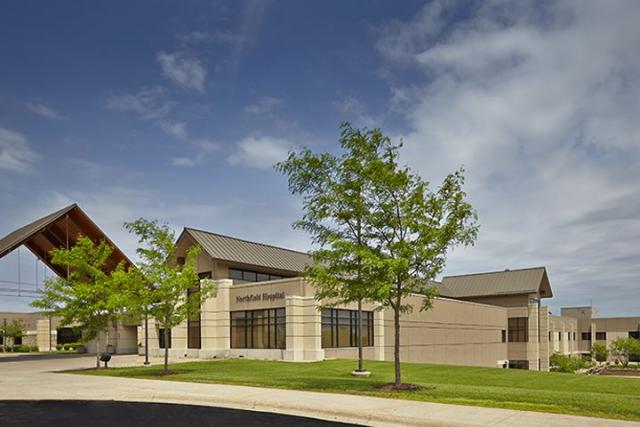
Northfield Hospital’s experience shows the benefits of treating AI as an opportunity to modernize a full end-to-end workflow.
They began with a goal of freeing up their staff from hours of highly manual fax processing every day. Then, they discovered that just parsing and routing incoming documents wasn’t enough. Staff needed visibility into where faxes were going and why, and the organization discovered outdated workflows like physicians being required to approve simple prescription refills.
Because the organization was willing to modernize the whole workflow, rather than just automating one piece of it, Northfield was able to:
- Streamline faxes so much that one clinic location now handles all faxes for the organization.
- Empower the nurse pool to approve simple prescription refills, freeing up physician time.
Organizations that implement operational AI effectively define what workflow success looks like before deployment begins.
Key questions include:
- What work should the system continue handling independently?
- When should workflows escalate to staff?
- What conditions indicate a workflow has stalled?
- What operational outcome actually represents successful completion?
These decisions often determine whether workflows continue moving reliably or whether staff remain responsible for reconnecting fragmented processes behind the scenes.
Identifying the operational problem is only part of the process. Organizations also need to define the improvement they are trying to achieve.
More AI activity does not necessarily indicate better operational performance. What matters is whether workflows are actually completing more reliably and efficiently.

Measure outcomes, not activity
Much of the work required to keep healthcare operations running is invisible. Staff spend time tracking down information, reconnecting disconnected workflows, monitoring unresolved work, and determining who owns the next step.
Successful healthcare AI implementations reduce that hidden coordination burden by clarifying ownership, surfacing unresolved work sooner, and helping workflows reach resolution more reliably.
For example, DENT Neurologic Institute found that staff were spending significant time reviewing incoming faxes, determining where documents belonged, and identifying who needed to act next. Much of that work involved manually applying complex routing rules and directing information to the appropriate team. Simply digitizing documents would not have eliminated that effort. Instead, DENT automated document classification and routing, helping information reach the appropriate workflow more efficiently. For example, medication refill requests could be routed directly to the nurse practitioner group responsible for reviewing them, reducing the manual coordination required before clinical review could begin.
Banner Health faced a similar challenge. Staff spent hours each day reviewing and triaging patient questions about imaging visits. Many inquiries involved straightforward topics such as directions, preparation instructions, or scheduling questions, yet staff still needed to review each message and determine whether follow-up was required. Simply adding another communication channel would not have reduced that workload. Instead, Banner used conversational AI to answer routine questions, route more complex needs to the appropriate staff member, and reduce the amount of manual message triage required. Staff spent less time sorting and routing inquiries, patients received answers more quickly, and teams could focus on issues that required human attention.
In each case, the greatest value came from reducing the largely invisible manual coordination required to keep the work moving. The strongest healthcare AI implementations reduce operational friction, eliminate unnecessary handoffs, and help work reach the right people more efficiently.
Scale the framework, not just the workflow
Many healthcare organizations begin by addressing a single operational challenge. Successful AI programs rarely stop there.
Once an organization clearly defines a workflow, establishes ownership, and demonstrates measurable improvement, the same operational approach can often be applied to adjacent workflows.
UAMS followed this path. After successfully improving appointment cancellation workflows, the organization expanded the same operational approach to other patient access challenges including referral intake and records collection. Each implementation built on existing processes, integrations, and lessons learned from earlier projects, allowing the organization to improve operations incrementally over time.
Successful organizations often scale an operational approach rather than a workflow. Once they establish a repeatable process for identifying operational problems, defining success, and improving workflow execution, they can apply that approach across multiple areas of the business.

Build resilient workflows
Healthcare workflows rarely operate under ideal conditions. Patients stop responding, information arrives incomplete, referrals lack required documentation, and work frequently moves across departments, teams, and systems.
Organizations need workflows that can continue even when conditions change, without requiring staff to manually intervene at every step.
During Luma Health’s recent eClinicalWorks Executive Session, healthcare leaders repeatedly returned to this challenge.
While discussing cancellation recovery workflows that continue outreach and escalation until patients are successfully rescheduled, Norman Regional’s Toby Branum summarized the goal simply: “We’re trying to create full, robust workflows that don’t just stop.”
Ryan Health CIO Farooq Ajmal described the limitations of automating isolated workflow steps while leaving the broader process unchanged. “When you do automation in increments, you’re just taking your manual workflow and translating it digitally.”
Both observations point to the same reality. Healthcare organizations need workflows that can adapt when information is missing, patients disengage, or conditions change. As AI becomes more deeply embedded in healthcare operations, organizations seeing the strongest results are designing workflows that can recover, escalate, and continue progressing toward completion even when unexpected situations arise.
Define the job, goal, and outcome before you deploy AI
Healthcare organizations are discovering that successful AI implementations depend on clearly defining the operational work the system should help complete, how workflows should continue when conditions change, and what successful resolution actually looks like in practice.
As health systems deploy AI more deeply across scheduling, intake, referrals, patient communication, and care coordination, organizations seeing the strongest operational results are focused on workflow continuity and reducing the coordination burden placed on staff.
In the final article in this series, we’ll explore what happens as AI becomes more deeply embedded across healthcare operations, including the implications for workflow ownership, staffing models, software interfaces, and the future role of traditional healthcare systems.