“Headless” in Healthcare: Why Everyone’s Suddenly Talking About It
“Headless” is quickly becoming one of the most important new concepts in healthcare IT. Let’s break down what it actually means for healthcare operations and why it matters beyond the technology hype.
Healthcare organizations have already deployed the first wave of AI. Chatbots, AI assistants, workflow automation, and summarization tools are increasingly common across patient access and operational workflows.
But healthcare teams still spend enormous amounts of time manually reconnecting fragmented workflows across systems, portals, spreadsheets, inboxes, and operational tools.
That’s why “headless” may become one of the most important emerging shifts in healthcare AI over the next several years.
The next phase of operational AI focuses on coordinating and executing work across disconnected systems instead of requiring staff to manually reconnect workflows.
For many health system leaders, the challenge is understanding what concepts like headless, agents, orchestration, MCPs, and bounded autonomy actually mean operationally. Just as important is understanding which shifts may meaningfully reshape healthcare operations over the next several years.
This article is part of AI in Healthcare: Decoding the AI Shift Reshaping Healthcare Operations, a series designed to help health system leaders cut through AI hype and understand the operational AI transition now unfolding across healthcare.
In this first article, we’ll examine why “headless” is suddenly everywhere, what it actually means in practice, and why health system leaders should start paying attention now.
“Headless” is suddenly everywhere. What does it actually mean?
Across enterprise software, major technology vendors are increasingly investing in AI that can operate across applications rather than remaining confined to a single interface. Salesforce’s Headless 360 initiative and Microsoft’s expanding Copilot ecosystem both reflect a broader shift already underway.
For many health system leaders, though, the term “headless” still sounds vague, technical, or disconnected from the realities of running healthcare operations.
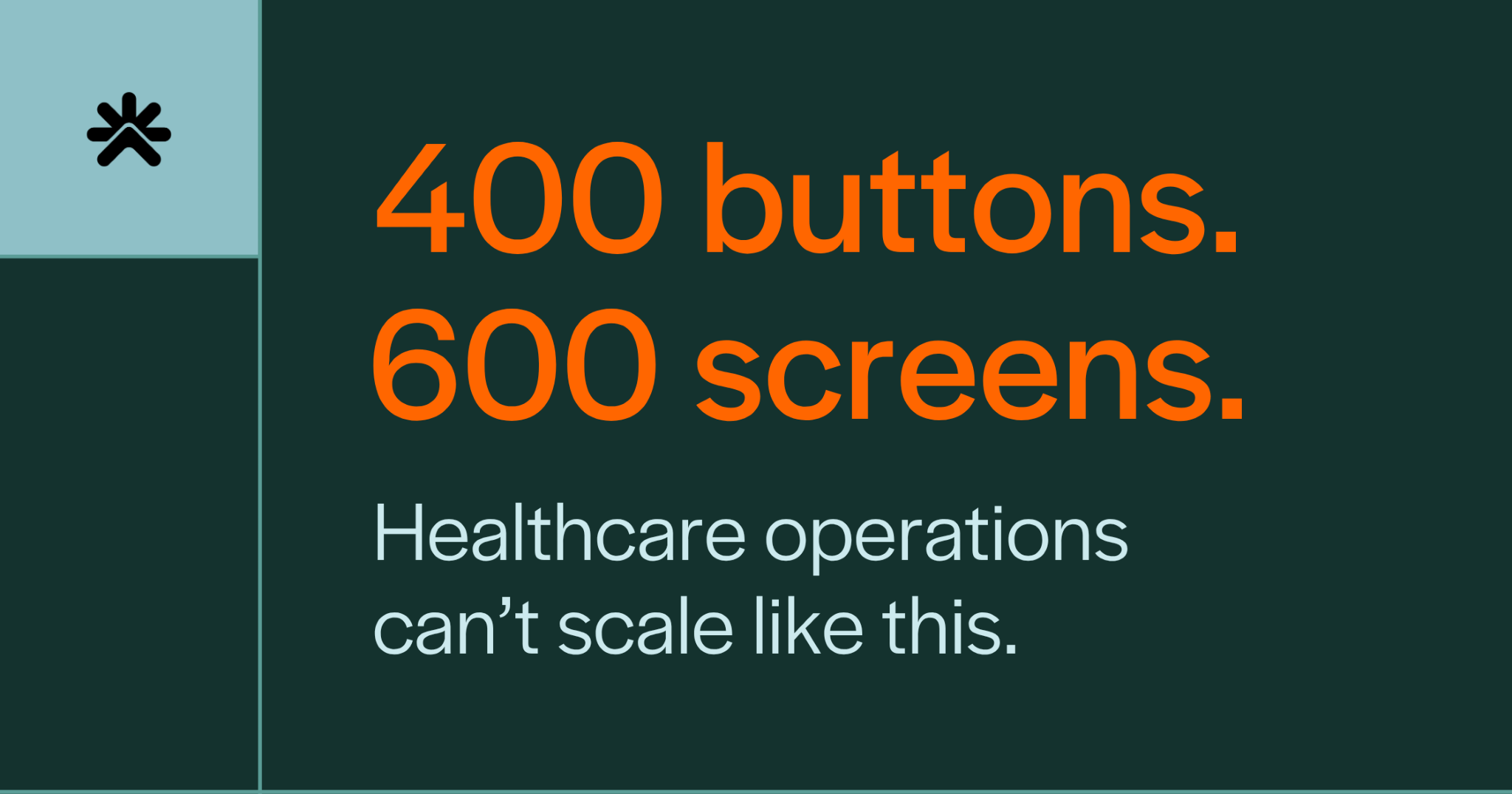
Despite the name, nobody is actually losing their head. In software architecture, the “head” is simply the user interface people interact with. A headless approach separates that interface from the underlying systems and processes.
The concept can sound technical, but in the short video below, Luma co-founder and president Aditya Bansod explains what “headless” actually means in healthcare and why major technology vendors are suddenly embracing it.
Today, most healthcare AI tools still operate primarily through standalone interfaces. A user asks a chatbot a question, summarizes a note, or completes a task inside a single application.
A headless approach allows AI systems to interact directly with underlying systems rather than relying solely on user interfaces.
Instead of requiring staff to manually navigate multiple applications, AI systems can increasingly pull information together, trigger actions, and keep work moving behind the scenes.
Technologies like Model Context Protocol (MCP) are helping make this possible by enabling AI systems to access and coordinate information across systems of record rather than operating within a single application.
Instead of staff manually checking scheduling systems, patient messages, spreadsheets, and the EHR to reconnect a stalled workflow, AI systems can increasingly help identify the next step and keep work from stalling.
That matters because healthcare operations rarely happen inside one system anymore.
A patient may begin scheduling online, respond to an SMS reminder later, call a contact center to reschedule, complete intake through another platform, and receive follow-up outreach through yet another channel. Behind the scenes, operational teams are still responsible for stitching those workflows back together manually.
Anyone who has worked inside healthcare operations recognizes the reality. Staff spend huge portions of their day bouncing between systems just to keep work from stalling.
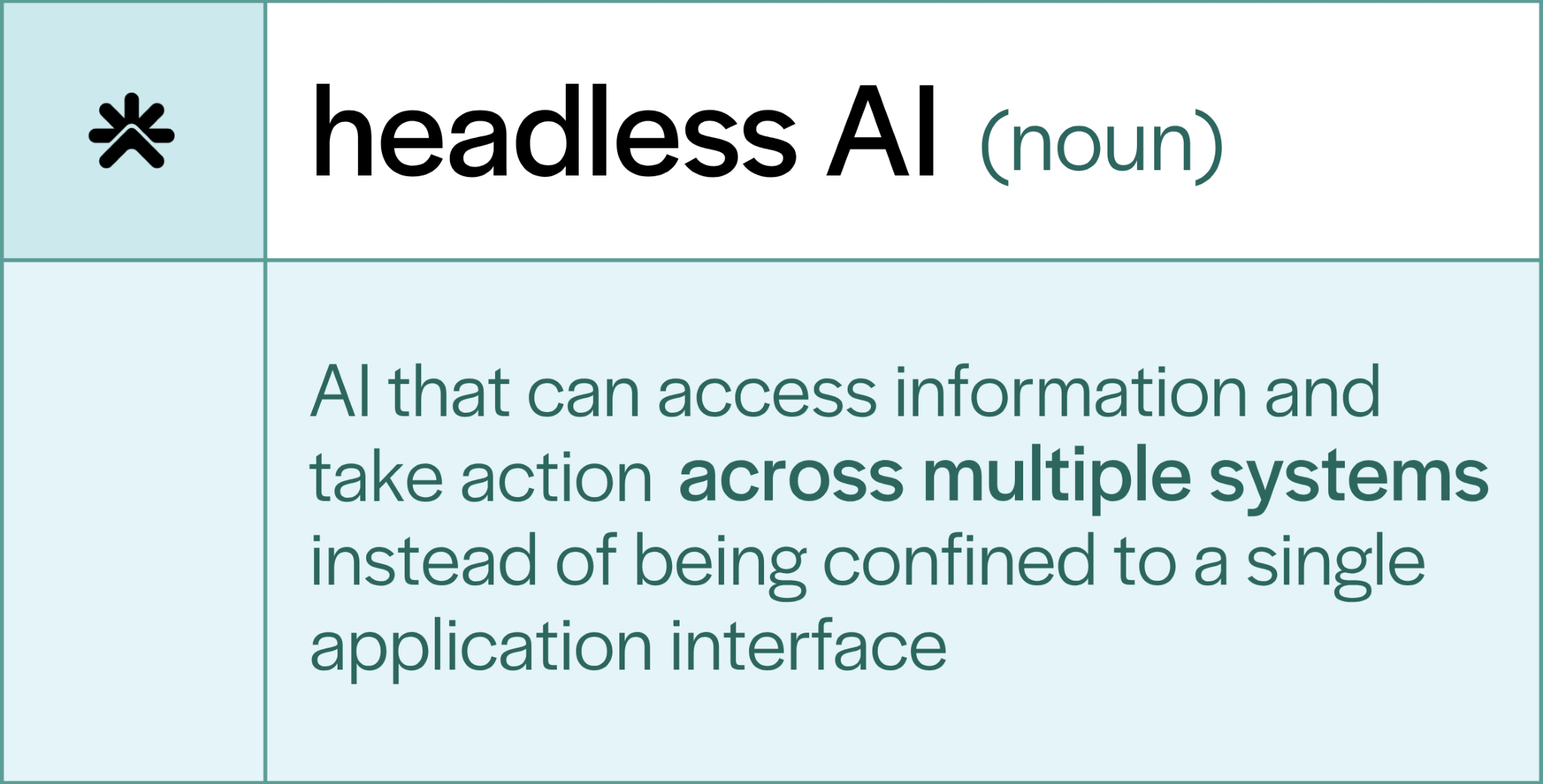
As Bansod recently put it, many operational teams are still dealing with “400 buttons on 600 screens” simply to complete routine work.
That work slows teams down, limits scalability, and creates enormous operational drag for healthcare staff.
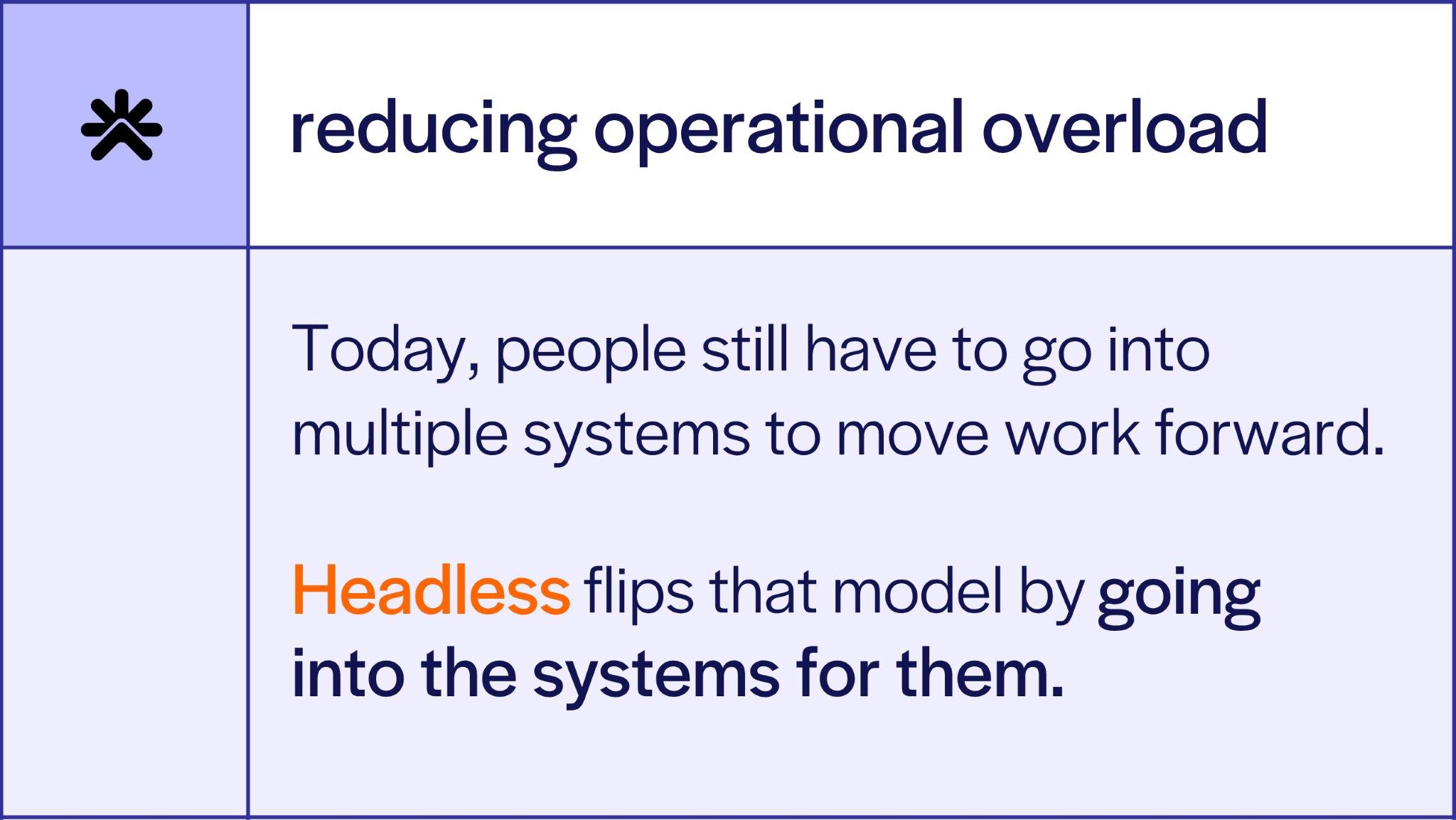
As Bansod puts it, “Today, people still have to go into systems to move work forward. Headless flips that model by going into the systems for them.”
The shift from coordination to execution
Healthcare organizations already operate across enormous numbers of systems, workflows, and operational handoffs. As AI adoption expands, many organizations are discovering that adding more disconnected AI tools can sometimes add complexity instead of reducing it.
Meanwhile, staff are still jumping between systems just to complete routine operational work.
Take something as simple as following up on missed appointments. Today, staff may still need to manually check scheduling systems, review outreach history, update spreadsheets, and coordinate follow-up across multiple tools. With a headless approach, teams could simply tell the system:
“Identify today’s missed appointments and begin the appropriate follow-up.”
AI systems could then determine the next steps, coordinate actions across systems, and carry out much of the follow-up automatically.
That’s why headless matters operationally. AI systems can increasingly help healthcare teams reconnect stalled workflows, trigger next steps, and reduce the manual effort required to keep operations moving.
Why health system leaders should care about headless now
What happens when healthcare organizations can coordinate significantly more operational work without proportionally increasing administrative effort?
That’s the question health system leaders should be asking now.
The information needed to improve patient access, close care gaps, and strengthen follow-through already exists across healthcare organizations. The challenge is that it often lives across disconnected systems, requiring staff to manually piece together what needs attention and coordinate the next steps.
Today, many operational initiatives scale by adding people: coordinators, navigators, schedulers, and administrative staff.
Headless has the potential to change that equation by enabling healthcare organizations to coordinate and execute more work without requiring the same increase in manual effort.
Healthcare organizations would be able to support larger patient populations, close more care gaps, improve referral follow-through, and reach more patients who are overdue for preventive care without expanding teams at the same rate. In many organizations, those efforts are directly tied to quality performance and reimbursement.
Reaching that level of scale will require AI systems that can coordinate work across the tools and workflows healthcare organizations already use.
Technology should support work, not force work
At Luma, we’ve long believed healthcare technology should support work where it actually happens. For years, that meant bringing workflow capabilities closer to the EHR. As AI evolves, it may increasingly mean meeting people wherever they choose to work.
For many healthcare organizations, the EHR remains where operational teams spend much of their day. But Luma’s goal was never simply to bring workflow capabilities closer to the EHR. Healthcare organizations should be able to act on their data and manage patient interactions without leaving them trapped across disconnected systems.
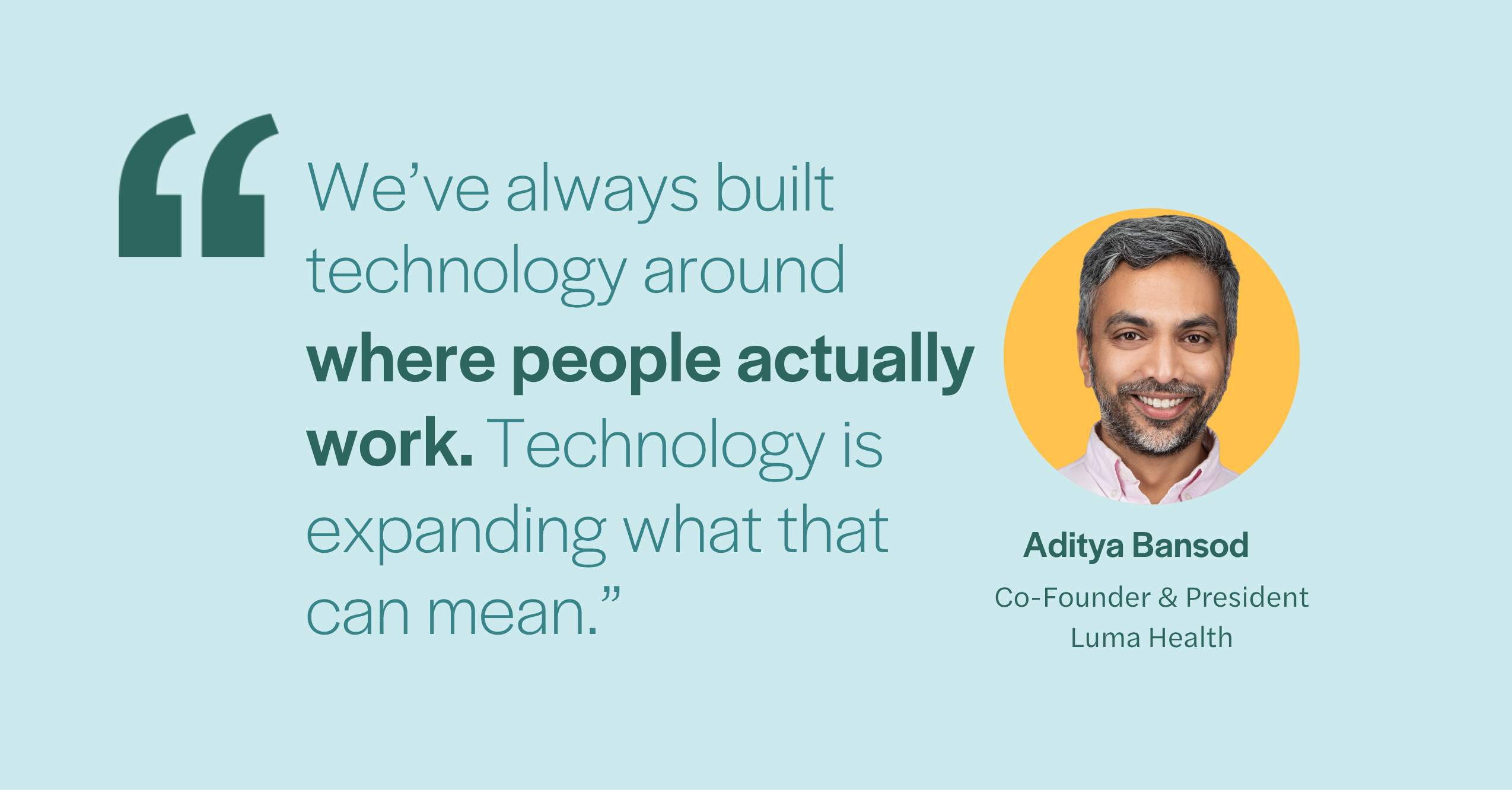
As Bansod puts it, “We’ve always built technology around where people actually work.”AI is expanding what that can mean.
Across industries, people are increasingly using AI to synthesize information and coordinate work across multiple tools instead of manually navigating each one. Healthcare operations are beginning to move in the same direction.
Technologies like MCPs are accelerating this shift by making it easier for AI systems to securely access information and actions across systems.
We’re excited by the opportunity headless represents because it points toward a future where AI systems can execute more operational work across systems and reduce the manual effort required to keep operations moving.
We recently demonstrated this concept by connecting Claude to Luma services and having it coordinate several routine operational tasks simultaneously, including identifying patients requiring insurance follow-up, resolving scheduling issues, and preparing outreach for missed appointments:
The same model could be extended to scenarios such as:
- Overnight operational triage: AI reviewing overnight voicemail requests, prioritizing urgent scheduling issues, and initiating appropriate follow-up before clinics open in the morning
- Referral bottleneck resolution: AI identifying that a referred patient never completed scheduling, determining the appropriate next step, and initiating outreach to help move the referral forward
- Proactive intake coordination: AI identifying missing intake information early and initiating outreach to resolve gaps before patients arrive for care
- Workflow continuity across systems: AI executing routine operational steps across systems while escalating exceptions that require human judgment
These capabilities are emerging quickly, and many healthcare organizations are only beginning to understand how operational AI could reshape the way work gets completed across healthcare systems.
This is only the beginning of AI in healthcare operations
Most health systems have already started their AI journey. But current chatbot, assistant, and workflow automation deployments still represent just the first phase of operational AI adoption, with a much larger operational shift still ahead.
Headless is the key to operational AI’s next phase: helping healthcare organizations coordinate and execute more work, support more patients, and reduce dependence on manual coordination across existing systems and workflows.
In the next article in this series, we’ll decode the rapidly expanding language of operational AI, including workflows, agents, orchestration, harnesses, governance, and bounded autonomy, and explain why those concepts matter operationally for healthcare organizations.