




Agent Launchpad runs AI agents that work together on multistep workflows like procedure prep. Early adopters see more time for nurses, and a more convenient patient experience.
Agent Launchpad is now available as part of Luma’s fall 2026 product release. It lets health systems use AI agents for multistep workflows, like the phone tag and follow-up typically needed to keep procedures on track.
Early adopters are already using it for colonoscopy prep. At the University of Arkansas for Medical Sciences (UAMS) and Mile Bluff Medical Center, 95% of patients responded. Periop nurses saved 20+ minutes per patient. At Mile Bluff, half of patients were fully prepared with no staff phone calls.
In the weeks leading up to a procedure, staff are checking what’s missing, following up with patients and internal teams, and often, playing phone tag. Completing the same steps over and over takes hours of staff time.
Agent Launchpad works as an AI agent orchestrator. From within Luma’s Operational AI platform, health systems can run AI agents that work together to accomplish an outcome, like “get patients ready for knee replacement surgery.”
Health systems retain control over how the work gets done: what agents handle, which guidance they follow, and when staff step in.
Read on to see how it works, how health systems are already using it for colonoscopy prep, and how to get started.
The challenge: Staff still connect workflow steps manually
Workflows like getting a patient ready for a procedure take many steps and several teams. For a colonoscopy, for example:
- Periop nurses confirm the patient has their prep materials and knows when to start.
- Anesthesia nurses collect screening answers.
- When a question needs another team, staff pass it along, follow up, and restart prep once it’s resolved.
- Periop nurses call back to confirm the patient has started prep and has a ride home.
- Staff track who hasn’t answered or finished a step, then call again, often more than once.
Someone has to connect all of it so the patient is ready on procedure day. Health systems we spoke to shared that on average, nurses make 2.3 calls just to reach the patient for the first time. They have even more calls to make throughout the prep.
This happens in any workflow that spans teams and weeks. Staff, automation, or AI might handle single tasks. But a person still has to keep the whole thing moving. Agent Launchpad hands more of that follow-up to AI.
How Agent Launchpad works
With Luma’s Fall 2026 product release, Agent Launchpad puts agents in charge of a job so staff can step in only when they need to. Here’s how it works:
- Start with a ready-made template, such as colonoscopy prep, or choose a goal and let AI determine how to reach it.
- Upload your instructions, screening questions, and FAQs. Agents use this approved guidance for patient conversations.
- Decide what agents can handle and when staff need to step in.
Ready-to-use workflow templates in this first release include pre- and post-procedure workflows, such as:
- Colonoscopy prep
- Colonoscopy follow-up after the procedure
- Knee replacement prep
- Cataract surgery prep
- Bariatric surgery prep
- Endoscopy prep
- Pain management guidance
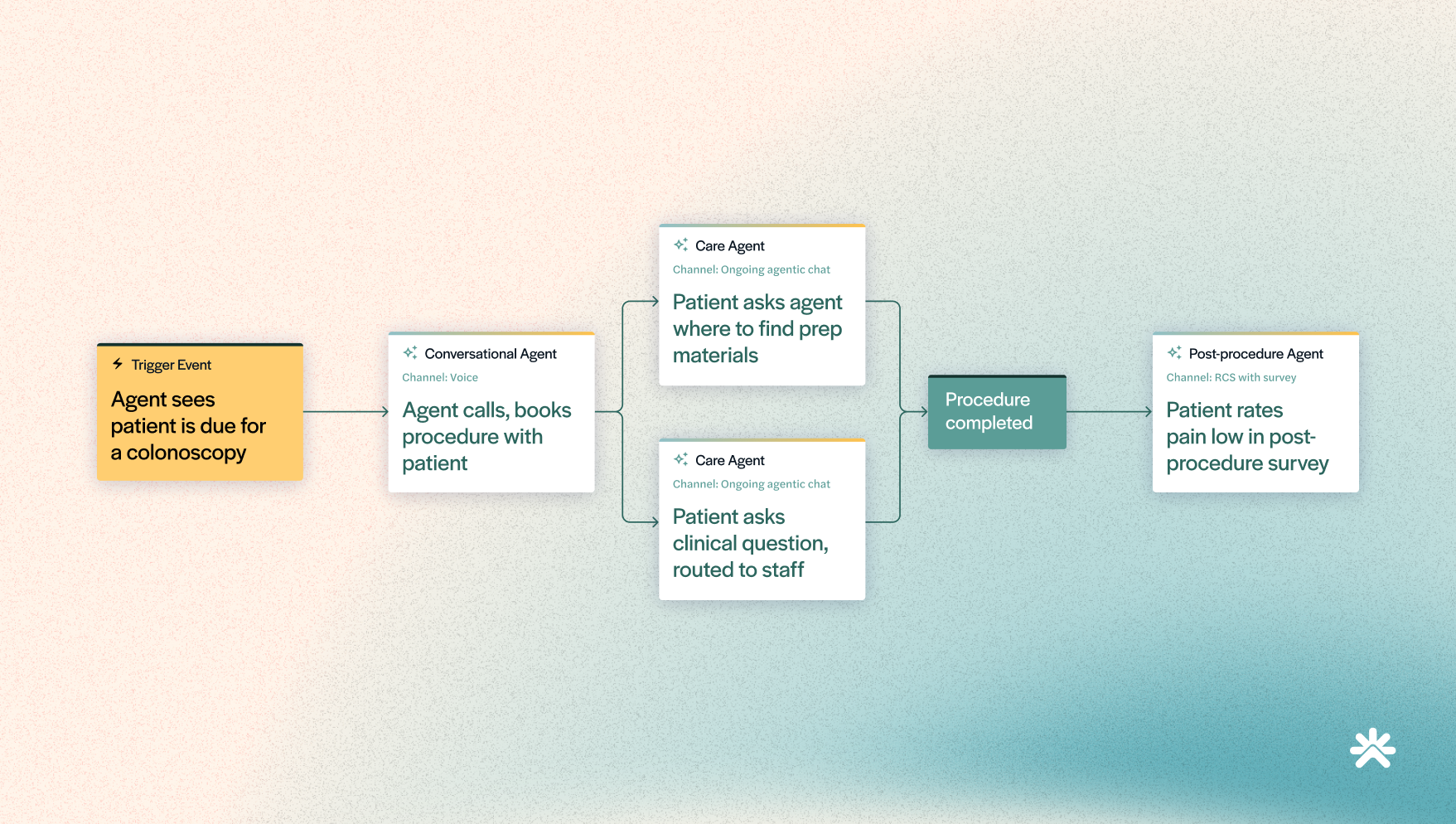
In action: Getting patients ready for colonoscopies
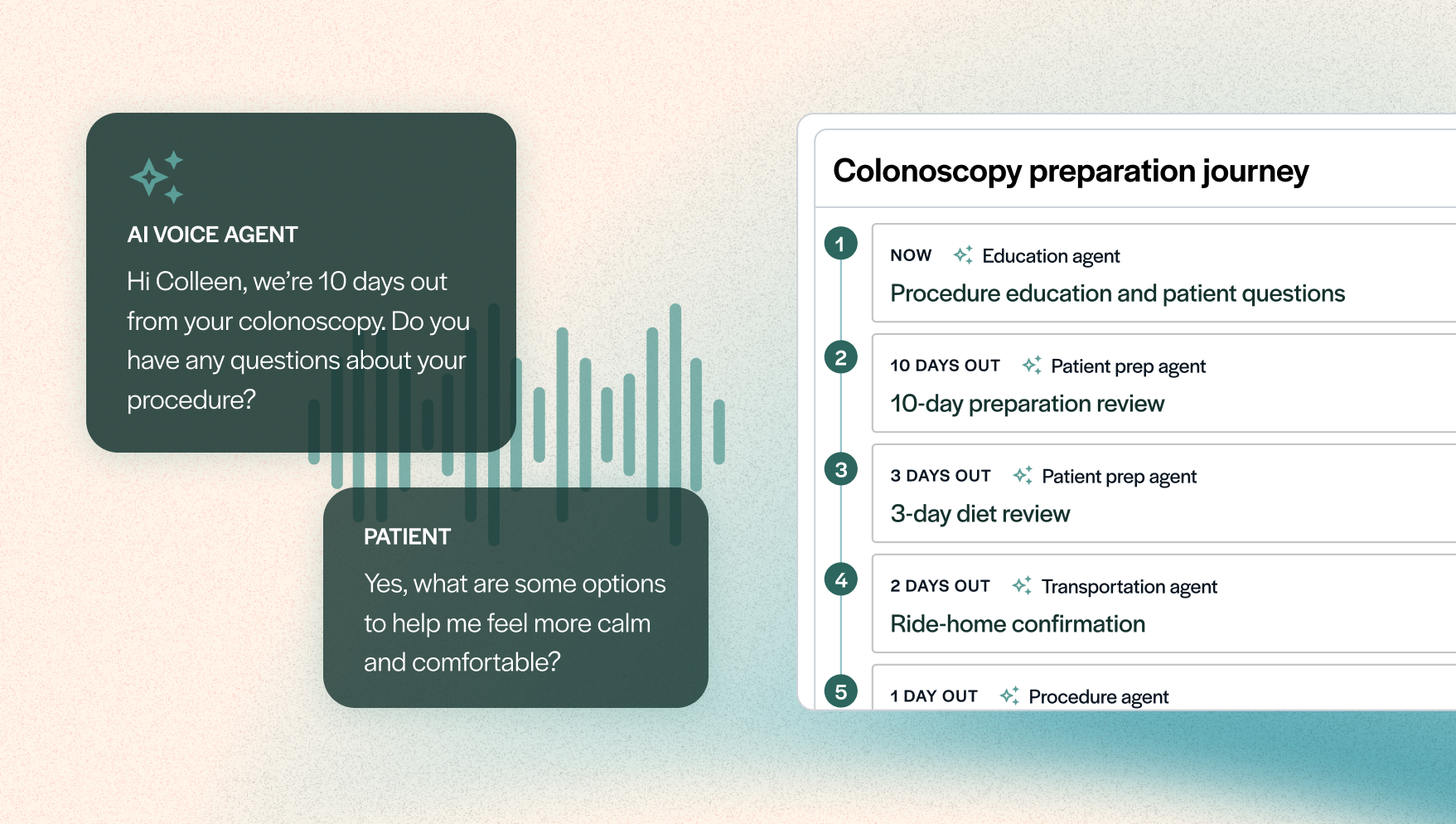
The goal is a patient who is ready for her procedure. Agents follow the provider’s prep instructions, periop logistics, and anesthesia screening rules. They check in 14 days, seven days, three days, and one day before the procedure.
The example below follows one patient. It shows how agents use the health system’s guidance and escalation rules to decide what happens next.
Outreach adapts to the patient
The patient’s phone rings as she heads out for errands. “Can you text me instead?” The agent switches to text. The patient confirms her identity, appointment date, and that her brother will drive her home.
A missed call doesn’t end outreach. Agents call or text again, using patient engagement data to guide when and how to reach out. Follow-up continues in the days before the procedure until the patient’s prep is complete.
Patients ask questions in the same thread
“Do you use a CPAP?” The patient isn’t sure what CPAP means. The agent explains it using guidance the health system approved. She answers in her own words. If she wants to know why a prep step matters, the agent answers from the health system’s instructions and FAQs.
The thread stays open after screening. Patients can ask routine prep questions any time of day. Later, she asks about comfort measures during the procedure. She texts the request in the same thread without needing to figure out who to call.
Behind the scenes, several agents share what’s happened in the conversation. They follow up on requests and track unfinished steps. If she reschedules, the timeline updates on its own. Future outreach matches the new date.
Clinical questions go to a clinician
“Should I stop taking my seizure medication?” This needs clinical judgment. The agent follows the health system’s escalation rules. It flags the question for the care team and tells the patient it’s been sent.
The nurse sees the full conversation, so the patient doesn’t have to start over.
The nurse decides what happens next. She can see the patient’s progress and open needs. She can resume the workflow, repeat a step, skip ahead, or stop it. Here, she answers the medication question and resumes. Agents send the next check-in as scheduled, and the nurse doesn’t have to make that call herself.
What changes for patients and staff
Patients ask questions and raise new needs in one conversation. They don’t have to hunt for the right team. Staff get more time to assess concerns, help patients with harder prep needs, and answer clinical questions before procedure day.
Orchestrating multiple workflows for one patient
Agent Launchpad can also coordinate multiple workflows for the same patient, using your health system’s rules to decide which ones to run and when. For example, it can run colonoscopy prep before the procedure and start a separate follow-up workflow afterward, so staff don’t have to start each one. If a patient needs prep for both a colonoscopy and an upper endoscopy, Agent Launchpad can run those prep workflows at the same time when your protocols allow it.
Early results at UAMS and Mile Bluff Medical Center
UAMS and Mile Bluff are each using Agent Launchpad to coordinate colonoscopy prep for busy clinical operations teams. Here’s what they’ve seen so far:
- 95% patient response rate on average, with 70% responding within the first day of outreach.
- 50% of patients completely prepared for procedures with no staff phone calls at Mile Bluff.
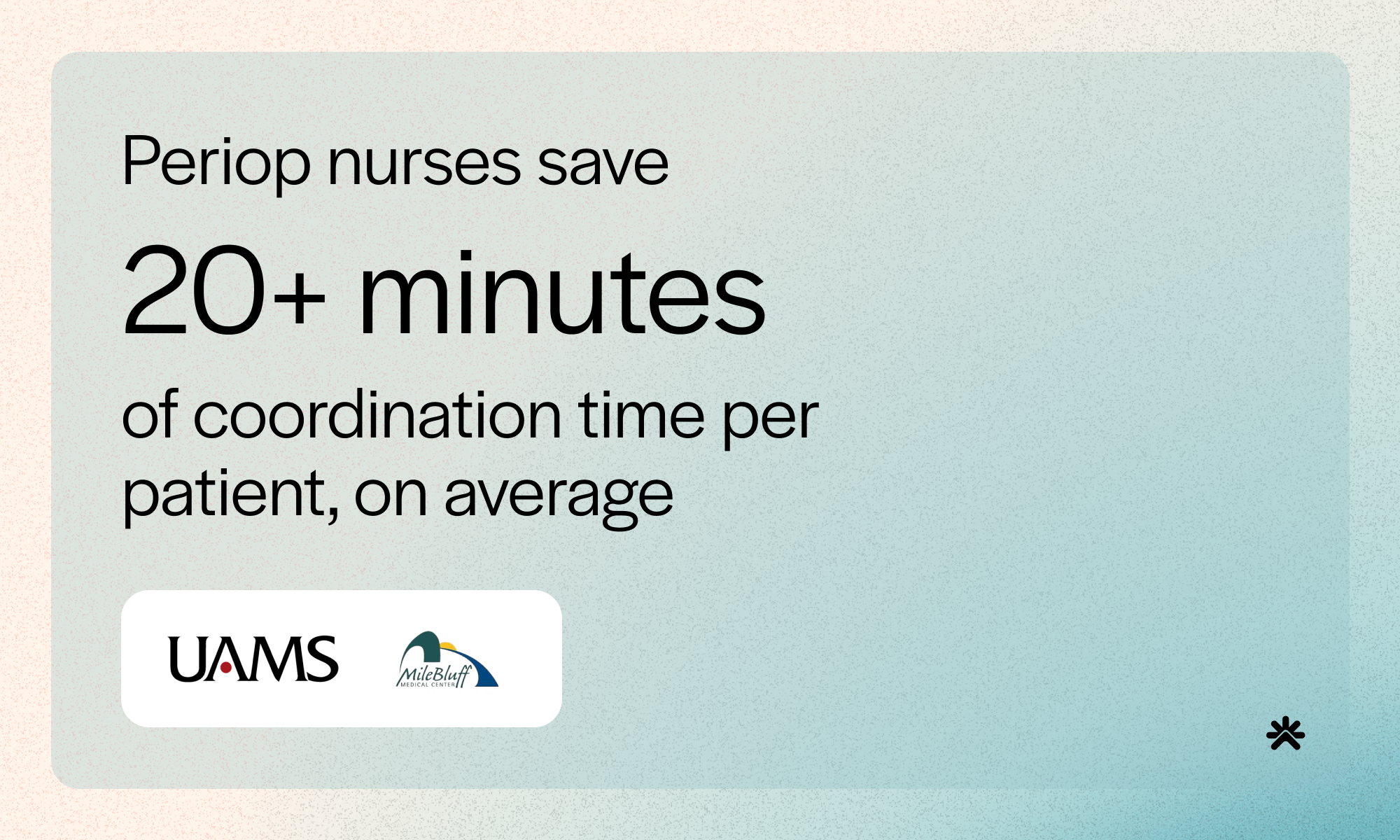
- 20+ minutes of coordination saved per patient for periop nurses, on average.
“Luma’s agentic procedure prep now answers routine prep questions for patients, day or night, at the times that work best for them,” said Paige Anderson, Assistant Clinical Service Manager at UAMS. “When a question needs a nurse, it comes straight to our team. Patients are completing their prep and showing up ready, and our nurses have more time for the clinical work only they can do.”
At Mile Bluff, Tamara Coughlin, Director of Surgery, reports fewer nursing hours spent on preparation calls as patients ask questions whenever it’s convenient for them. “We’re seeing more patients prepared for their procedures earlier, with less burden on staff,” she said.
Where is your team still chasing the next step?
Look for workflows where staff spend a lot of time checking what’s missing, following up, or handing work between teams. That’s work you could hand to Agent Launchpad. Start with the workflow that needs the most follow-up. Then decide what agents should finish and which decisions stay with staff.
Book a demo to explore an orchestrated workflow for your health system.
Further reading: