From Pre-Visit to Clinic Floor: How Operational AI Keeps Care Delivery Moving

Luma’s Summer ’26 release connects pre-visit preparation, check-in, and in-clinic flow so patients arrive ready for care and staff can see what still needs attention.
A patient can arrive without being ready for care
A patient can arrive on time with an unfinished form, an unresolved copay, or information that still needs attention. Add walk-ins and same-day appointments, and the operational picture gets more complicated.
Health systems are giving patients more ways to prepare for care before they arrive. Patients can complete forms, provide insurance information, and handle other preparation from home. But that work loses value if staff have to figure out the patient’s status all over again when they arrive.
For more than a decade, Luma has helped health systems keep the work around patient care moving. Our Operational AI platform orchestrates workflows across the entire patient journey, including helping patients complete intake forms and other prep before they arrive. Now, our Summer ’26 product release extends that with new features for financial preparation, check-in, and in-clinic patient flow.
Highlights include:
- AI-powered balance collection and copay determination. Navigator lets patients check an outstanding balance and pay through LumaPay, while AI suggests copays based on insurance information.
- Check-In Builder for different arrival workflows. Configure check-in paths for scheduled patients, walk-ins, labs, non-clinical lines, and patients who need staff assistance.
- Self-service check-in by kiosk, tablet, or QR code. Patients can check in and complete outstanding intake tasks in the clinic or on their own phone.
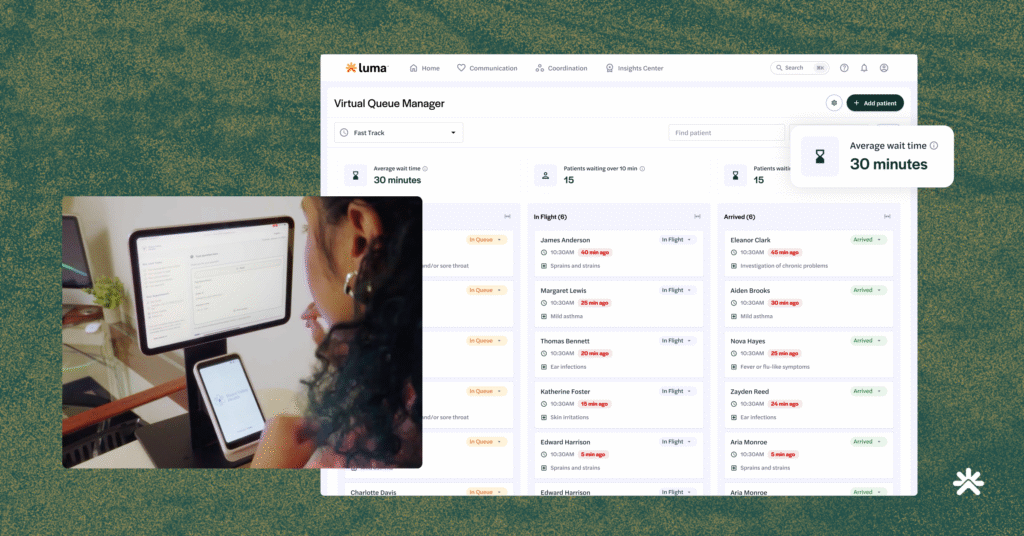
- Queue Manager and schedule visibility. Automatically place patients into the right queue after check-in, manage patients as they move through the clinic, and see which scheduled patients still need forms or payment.
- Self-service LumaPay administration. Order and configure card readers without support and reconcile transactions, fees, refunds, and disputes in one Balance Summary Report.
Keep reading to learn more about these features and outcomes from health systems using them today.
Get more patients financially ready for care
A patient can finish every form and still arrive with a financial question staff have to resolve. What’s my copay? Do I have an outstanding balance? How much do I owe? Unanswered, those become front-desk work.
Navigator Balance Collection (Early Access) lets patients ask Navigator about an outstanding balance and receive a secure LumaPay link by text to review and pay.
AI Copay Determination (Early Access) suggests a copay from the patient’s insurance, with the option to send it to the patient automatically based on confidence level.
Summer ’26 also makes the work around payment collection easier for staff. LumaPay customers can order and configure card readers without filing a support ticket, while a new Balance Summary Report brings transactions, fees, refunds, and disputes together in one place for easier reconciliation.
Coming later this fall: additional enhancements including bulk eligibility checks, editable copays, and partial refunds.
Make check-in fit the patient and the visit
Check-in doesn’t look the same for every patient or every visit. A scheduled patient may have only one or two tasks left, while a walk-in may need to start from the beginning. When everyone enters the same process, staff carry the mental load of sorting out the differences.
Check-In Builder lets health systems create different arrival paths for scheduled patients, walk-ins, labs, non-clinical lines, and patients who need staff assistance, including where each goes after check-in. Patients can use a kiosk or tablet to check in and complete outstanding intake tasks. New QR Check-In lets them scan a code in the clinic to start or finish those tasks on their own phone.
Queue Manager gives staff a live view of patients moving through the clinic, organized into the queues and statuses their organization uses.Staff can see and filter who’s waiting, communicate with patients, update their status, and move patients between queues. Luma’s schedule view also shows which scheduled patients still have forms or payments to complete.
For U.S. urgent care and emergency departments, upcoming capabilities for Tonic by Luma let walk-in patients add themselves to the queue, then complete required forms on their phone or at a kiosk.
In action at our customers
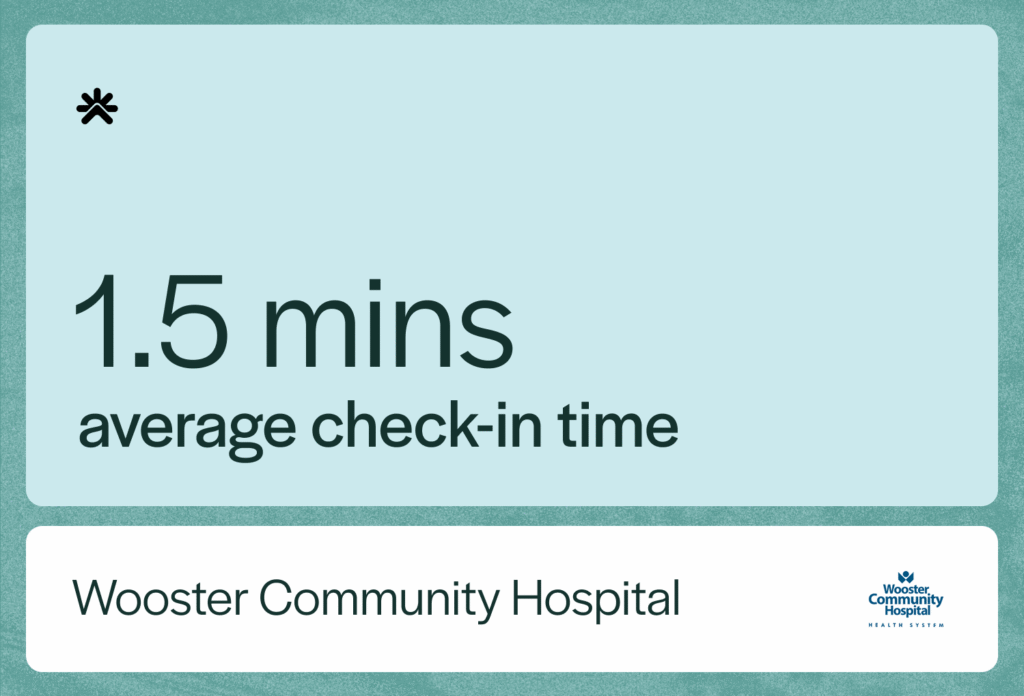
Wooster Community Hospital averages 1.31-minute check-ins
At Wooster Community Hospital, growing patient volume was putting pressure on Central Registration, where staff managed patients as they arrived. The team handled registration for a wide range of hospital services outside scheduled provider visits, from diagnostic testing, outpatient surgery, and infusions to walk-in lab work and finance.
Wooster now uses Luma for both scheduled and unscheduled check-ins. Patients check in at a kiosk and then appear in Queue Manager, giving staff a shared view of patients moving through registration.
Since February 2026, Wooster has processed approximately 28,000 walk-in check-ins through Luma, with a 99.95% completion rate and an average check-in time of 1.31 minutes.
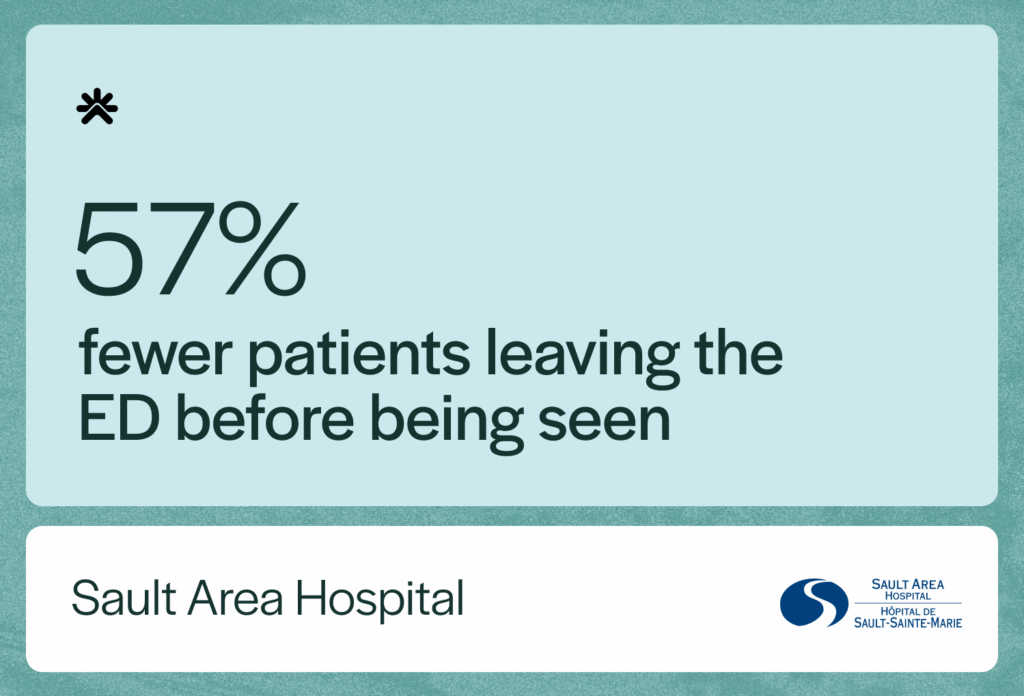
Sault Area Hospital reports 57% drop in patients leaving the ED before assessment
Emergency departments have no predictable schedule. Demand changes constantly, waits can stretch for hours, and some patients may leave before they’re seen.
At Sault Area Hospital, Queue Manager supports a Virtual Home Waiting Room for eligible lower-acuity patients, who can wait at home while staff continue to manage their place in the workflow.
For Sault, the Virtual Home Waiting Room helps staff manage patient flow when demand is unpredictable and long waits can affect whether patients stay for care. Sault has seen 57% fewer patients leave the emergency department before being seen, along with a 53% reduction in 90th percentile time to first assessment, a decrease of nearly 3.5 hours.
Clinical readiness should carry through the clinic door
Getting patients ready for care shouldn’t become a new operational problem when they arrive. Completed work should carry forward, and what remains should be easier for patients to complete and staff to manage.
Summer ’26 brings more of that work together across preparation, arrival, and in-clinic flow. It’s part of the larger role of Luma’s Operational AI platform: keeping work moving so staff don’t have to connect every step themselves.
See Luma’s Summer ’26 capabilities in action: request a demo. Customers can read more on the Help Center.
Further reading: